
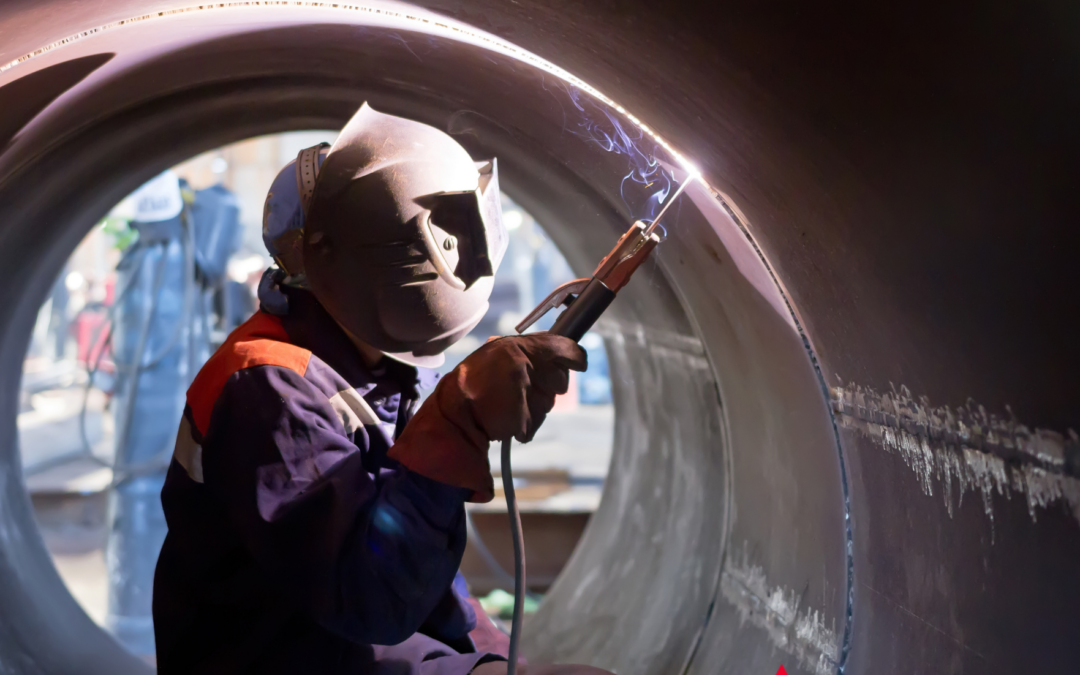
The welding industry has always been a cornerstone of manufacturing, construction, and infrastructure. For decades, the core principles remained the same: using heat to fuse metals. However, the last ten years have brought a wave of technological advancements that are reshaping the trade. From software-driven precision to portable powerhouses, these changes have made welding safer, faster, and more accessible than ever. Let’s explore the top 10 welding innovations that have defined the last decade and set the stage for the future of metal fabrication.
1. Advanced Waveform Control Technology
Modern power sources are more than just transformers; they are sophisticated computers. Advanced waveform control technology allows welders to manipulate the welding arc with incredible precision. Manufacturers like Miller with its Regulated Metal Deposition (RMD®) and Lincoln Electric with its Surface Tension Transfer® (STT®) have pioneered these systems. This innovation gives operators precise control over heat input, which minimizes spatter and distortion. The result is stronger, cleaner welds, especially on thin materials and exotic alloys that were once difficult to manage.
2. Handheld Laser Welding
One of the most disruptive innovations is the rise of handheld laser welders. These systems use a fiber laser to deliver a highly concentrated beam of energy, creating strong, clean welds with a minimal heat-affected zone. Compared to traditional TIG or MIG welding, handheld laser welding can be up to four times faster. It requires less skill to produce aesthetically pleasing welds, making it an attractive option for workshops looking to increase productivity without extensive training. Its precision and low heat input make it ideal for working with stainless steel, aluminum, and other sensitive metals.
3. Collaborative Robots (Cobots)
While industrial robots have been used in welding for years, cobots have brought automation to a whole new level. Unlike their larger, caged counterparts, cobots are designed to work safely alongside human operators. They are easier to program, often using simple drag-and-drop interfaces or even hand-guided teaching. This allows smaller shops to automate repetitive welding tasks, freeing up skilled welders to focus on more complex, custom work. Cobots improve consistency, boost output, and help address the ongoing shortage of skilled labor.
4. Augmented Reality (AR) Welding Simulators
Training the next generation of welders has become more efficient and cost-effective with augmented reality. AR welding simulators overlay a digital weld bead onto a real-world workpiece or coupon. Trainees wear a specialized helmet that allows them to practice their technique without using actual consumables like gas, wire, or metal. These systems provide real-time feedback on travel speed, angle, and consistency, accelerating the learning curve in a safe, controlled environment. This technology reduces material waste and makes training more accessible.
5. Battery-Powered Welding Machines
The dream of a truly portable, powerful welder is now a reality. Advances in battery technology have led to the development of cordless machines capable of handling MIG, TIG, and stick welding. These welders offer unparalleled freedom on the job site, eliminating the need for long extension cords or heavy engine-driven generators. They are perfect for remote repairs, maintenance work in tight spaces, and any application where mobility is key. Brands like Miller and ESAB have introduced models that provide enough power for significant work on a single charge.
6. Digital Weld Monitoring Software
Data is driving the future of manufacturing, and welding is no exception. Digital weld monitoring software captures and analyzes critical data from every weld, including voltage, amperage, wire feed speed, and heat input. This information helps shops ensure compliance with industry standards, track welder performance, and identify potential issues before they lead to costly failures. By creating a digital record of every joint, companies can improve quality control, streamline documentation, and optimize their entire welding operation.
7. Friction Stir Welding Advancements
Friction stir welding (FSW) isn’t new, but recent advancements have made it more versatile and widely adopted. This solid-state joining process uses a rotating tool to generate frictional heat, plasticizing and mixing the material without melting it. This eliminates many common welding defects like porosity and cracking. Over the last decade, new tool designs and robotic FSW systems have made it possible to weld complex geometries and previously “unweldable” aluminum alloys, making it a critical technology in the aerospace, automotive, and electric vehicle industries.
8. Auto-Darkening Helmets with High-Definition Optics
Welding helmets have evolved from simple passive lenses to high-tech personal protective equipment. The latest auto-darkening helmets feature advanced optics that provide a clearer, more natural view of the weld puddle. Technologies like Lincoln’s 4C® Lens Technology and Miller’s ClearLight™ Lens Technology reduce the traditional green tint, allowing welders to see colors more accurately. This enhanced visibility improves puddle control, reduces eye strain, and allows for better detection of defects as they happen, ultimately leading to higher-quality work.
9. Inverter-Based Power Sources
Inverter technology has completely changed the design of welding machines. Unlike older, transformer-based welders that were large and heavy, inverter welders use sophisticated electronics to convert power. This makes them significantly lighter, smaller, and more energy-efficient. Furthermore, the digital control offered by inverters allows for multi-process capabilities, enabling a single machine to perform MIG, TIG, and stick welding. This versatility and portability have made powerful welding tools available to everyone from large fabrication shops to hobbyists.
10. Self-Shielded Flux-Cored Wires for High-Strength Steel
As industries demand stronger and lighter materials, welding consumables have had to keep pace. The development of advanced self-shielded flux-cored arc welding (FCAW-S) wires is a prime example. These wires are designed for welding high-strength, low-alloy steels, providing excellent mechanical properties even in demanding outdoor conditions. They offer high deposition rates and don’t require external shielding gas, making them perfect for structural steel construction, bridge building, and heavy equipment repair where efficiency and toughness are paramount.
The Future is Bright and Welded
The last decade has been transformative for the welding industry. Innovations in software, automation, and hardware have pushed the boundaries of what is possible, making welding more precise, efficient, and safe. As we look ahead, we can expect these trends to continue, with artificial intelligence playing an even greater role in process control and robotics becoming more integrated into daily operations. The craft of welding is timeless, but the tools and technologies that support it will continue to evolve, empowering welders to build a stronger future.

