
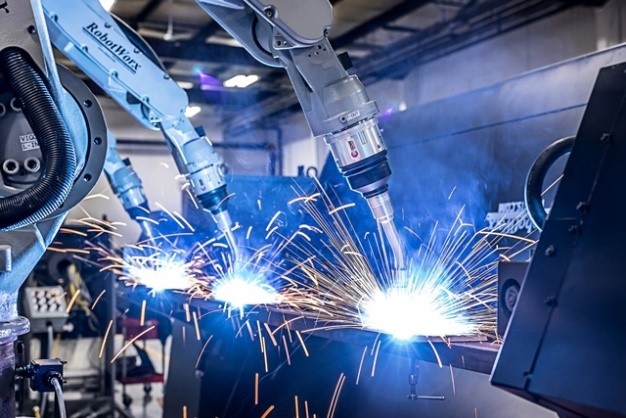
Welcome to an era where the optimization of robotics and state-of-the-art technology is preferred over manual labor, especially in the realm of mechanical workshops. This shift mainly chalks up to the cost-effectiveness of employing robotic labor in place of a welder’s manual work. In the following discourse, we’ll delve into a comparison of hand welding versus robotic welding. By understanding these differences in metal fabrication processes, you can make an informed decision that suits your unique needs. Additionally, you’ll learn that the principal factor in choosing one over the other is primarily based on the specific application.
Benefits of Robotic Welding
Robotic welding boasts a variety of perks that have swayed numerous welding workshops to embrace this process for their welding tasks. Both the customer and welding company stand to benefit immensely from this welding solution.
Among the benefits are improved efficiency; a robotic welder can work round the clock without the need for breaks or time off, thus completing welding jobs much quicker than human welders. There’s also enhanced safety as robots come equipped with safety precautions to shield welders from the welding arc’s high temperature and brightness.
Furthermore, robots offer greater accuracy as the automated process allows for consistent weld quality, using electronic weld process controllers, and it’s highly repeatable. What’s more, robots generate less waste and have an overall lower welding cost owing to its high productivity levels. Also, they can handle larger load capacities compared to manual welding.
On the other hand, these robotic welders do have a few drawbacks. These include higher setup cost, lesser flexibility, and minimum order quantity (MOQ) issues where the time taken to program the robotic arm might surpass the welding process’s time, making a human welder a more viable option.
Benefits of Manual Welding
Manual welding, on its part, is still widely embraced by many welding workshops. The reason being various big welding projects are taken on by large companies, making it unfeasible for small workshops to utilize robots to weld a few workpieces due to the high machine cost and the time required for programming the robots. Despite the hidden costs associated with manual welding, it is still a more favorable option for beginners and small businesses that only require small-scale welding operations. However, manual welding also has its drawbacks such as safety risks, efficiency issues, higher long-term costs, and more wastage.

